A Pakistani company can own 100% of a Saudi company in most activities. The route: settle the State Bank of Pakistan permission for the investment, get SECP papers certified, countersigned where needed and apostilled by MOFA, translate them into Arabic, register the investment with MISA, then sign the articles and take a Commercial Registration (CR) from the Ministry of Commerce. ZATCA, GOSI, Qiwa, the bank account and the manager's Iqama follow. Our two Pakistani files took 25 and 114 days from MISA registration to CR.
Key facts
- Pakistani permission
- SBP Foreign Exchange Manual, Chapter 20, Para 13 4
- Apostille for Pakistan
- In force since 9 March 2023; MOFA requires online registration since 27 July 2026 1 2
- MISA registration
- About 10 working days for a complete file; fee due within 15 business days of notice 3
- Dividends to Pakistan
- 5% Saudi withholding tax 7
- Tax treaty
- Pakistan–Saudi convention signed 2 February 2006 6
- Our two files
- MISA to CR in 25 and 114 days 9
Key takeaways
- Who invests decides the SBP route. IT companies and exporters have general permission through their bank; other companies need SBP's prior permission; a resident individual has no general permission to fund a private Saudi company.
- Pick a Saudi activity inside your Pakistani company's line of business. SBP's conditions ask for it.
- Pakistani papers go SECP, chamber or ICAP where required, then MOFA apostille. There is no Saudi embassy step.
- A CR can't trade on its own. ZATCA, GOSI, Qiwa, the bank and the manager's Iqama come next.
- Profit comes home as a dividend: 5% Saudi withholding, then SBP reporting when it lands in Pakistan.

Can a Pakistani own 100% of a Saudi company?
A Pakistani company can own 100% of a Saudi company in most activities, because Saudi Arabia's Investment Law sorts foreign investors by activity rather than nationality, and MISA's 13th-edition Investor Guide lists the few activities that need a Saudi partner or a capital floor. 3
The list is short. Trading with a Saudi partner needs SAR 26,666,667 of capital and at least 25% Saudi ownership. Trading at 100% foreign ownership needs SAR 30 million of capital and a presence in at least three regional or global markets, then a commitment to invest at least SAR 300 million over five years (or SAR 200 million plus a local manufacturing, R&D or logistics target) and to train 30% of Saudi staff every year. Communications activities need 40% Saudi ownership. Recruitment needs a home registration at least two years old. Software and IT activities sit outside that table, so MISA sets no minimum capital for them.
The harder question is who should hold the shares. A Pakistani company registers with MISA on its own papers: the SECP Certificate of Incorporation plays the part of the foreign partner's "commercial registration", next to the last financial year's accounts. Individuals can also register as foreign investors with MISA, typically with a passport and proof of financial standing. For a resident Pakistani the limit sits at home rather than in Riyadh, because SBP rules restrict how an individual can send capital abroad, as the next section explains.
| Who owns the Saudi company | Pakistani rule | What MISA sees | Our view |
|---|---|---|---|
| Pakistani private limited or SMC company | SBP general permission (IT, exporters) or prior permission (others) | SECP certificate, audited accounts for the last year | The cleanest route. Both our certificate files used it. |
| You, resident in Pakistan | No general permission for a private company stake; an exemption has to come from SBP through your bank | An individual foreign investor, typically registered on a passport and proof of financial standing | Workable on the Saudi side; settle the SBP exemption first, because that is the step that decides it |
| Overseas Pakistani using money earned abroad | Generally outside the outward rules, since nothing leaves Pakistan | As for an individual | Workable; keep the money trail clean |
| Saudi Premium Residency holder | Depends on where the money sits | Exempt from MISA's first three document items | Useful for a founder already living in the Kingdom |
Single-member companies qualify. File B on our certificate portfolio is a Saudi LLC owned 100% by a Pakistani SMC private limited company. Our Saudi company formation service for Pakistani founders runs this whole route from our office in Lahore.
State Bank of Pakistan rules for a Saudi investment
A Pakistani resident, company or individual, invests equity abroad under Para 13 of Chapter 20 of the State Bank of Pakistan's Foreign Exchange Manual, which allows it only in countries that let profits, dividends and capital be repatriated. 4 Saudi Arabia qualifies: its Investment Law regulations give investors the right to move capital, profits and dividends in and out of the Kingdom without delay.
Two conditions apply to every category. The money must be legitimate and tax-paid, and the investor must be financially sound, with a clean loan repayment record and a place on the active taxpayer list. After that, the route depends on what kind of investor you are.
| SBP category | Who | Where the money comes from | Limit | Who decides |
|---|---|---|---|---|
| A1 · IT companies | Companies in the IT sector (FE Circular 1 of 11 July 2024) | ESFCA; SFCA holding equity raised abroad; or the interbank market | Account balances, or up to the 3-year average net profit or USD 100,000, whichever is higher; total investment abroad within 80% of equity | Your bank under general permission; one designated branch for the interbank option |
| A2 · Exporters | Export-oriented companies outside IT | ESFCA first, then the interbank market | Interbank top-up per calendar year up to 10% of average export earnings of the last 3 years or USD 100,000, whichever is higher; within 80% of equity | Your bank; one designated branch for interbank money |
| C · Other companies | Any company incorporated in Pakistan | Special foreign currency accounts, else interbank | Case by case, backed by a feasibility report | SBP Exchange Policy Department, Karachi |
| D · Individuals | Resident individuals | Their own funds | Listed shares (USD 25,000 a year, 1% cap), employee share plans and sweat equity only | Anything else needs an SBP exemption |
Exporters: the ESFCA formula
A non-IT exporter funds a Saudi subsidiary first from its exporters' special foreign currency account (ESFCA), with no limit beyond the balance and the 80%-of-equity ceiling. Only when the ESFCA falls short does the interbank market come in, and then the yearly cap is 10% of average annual export earnings over the last three calendar years, or USD 100,000 if that is higher. Do the arithmetic early: below about USD 1 million of average yearly exports, the USD 100,000 floor is your real limit.
Three further conditions catch exporters. Export overdues must not exceed 1% of the previous year's exports over the last twelve months. Only one entity per country is allowed under the general permission. And an exporter using the USD 100,000 floor because its exports are thin must give the bank a list of products to be exported and an undertaking that the investment can raise Pakistan's exports.
IT companies: FE Circular 1 of 2024
Since FE Circular 1 of 11 July 2024, IT companies have their own category, A1, with three funding options: the ESFCA balance, an SFCA holding equity raised from abroad, or, for IT firms not yet exporting or short of balances, a remittance of up to their three-year average net profit from audited accounts or USD 100,000, whichever is higher. The third option needs the bank branch to be designated first. In every case the company's total investment abroad stays within 80% of its equity, after deducting items such as goodwill, deferred tax assets and receivables from related companies.
When SBP's prior permission is needed
A Pakistani company that is neither an IT company nor an exporter needs SBP's prior permission under Category C of Para 13. Your bank reviews the application, adds its recommendation and forwards it to the Director, Exchange Policy Department, in Karachi. SBP does not take applications that arrive without that review. The file needs audited accounts, directors' particulars, details of the Saudi company and a feasibility report showing the plan is viable and can earn foreign exchange or create jobs for Pakistanis. Any company asking for an exemption from the A1 or A2 limits goes the same way, under Para 13(IV)(3).
One condition runs through categories A1, A2 and C: the Saudi business should be of the same nature as your business in Pakistan. An extended line of business or vertical integration counts. A textile exporter opening a Saudi company to distribute its own products should pass. The same exporter opening a Saudi restaurant has a harder conversation with its bank.
The limitation for individuals
A resident individual has no general permission to put money into a private Saudi company. Category D covers listed shares abroad (up to USD 25,000 a year and 1% of the company), employee share plans and sweat equity, which lets an individual hold up to 20% of a foreign company for services rather than money. Anything else needs an exemption from SBP, requested through your bank. That is the main reason to hold a Saudi company through a Pakistani company rather than personally.
What SBP expects after the money moves
Within one month of investing, you file the documents proving the Saudi company exists and a return on Form V-100, both through your bank. Every year after that, the Saudi company's audited accounts go to the bank. Dividends come home through banking channels, the bank converts them into rupees, and a Proceeds Realization Certificate is filed with SBP. Those dividends can't be credited to a foreign currency account. Banks also weigh how well earlier investments repatriated profit when they judge a new request.
LLC, branch, RHQ or scientific office: which Saudi entity fits?
A Pakistani company usually enters Saudi Arabia through a limited liability company (LLC); a branch, a regional headquarters (RHQ) and a scientific and technical office are the other routes in MISA's 13th edition, each built for a narrower job.
We often recommend an LLC instead of a branch. The LLC is a separate Saudi company, so the owners are liable only up to their capital (Companies Law, Art. 156), one owner is enough (Art. 157), and the law sets no minimum capital outside MISA's special categories (Art. 174). 5 A branch is your Pakistani company itself operating in Saudi Arabia, so the parent's balance sheet stands behind every Saudi contract, and every change to the branch drags the parent's documents back through the attestation chain.
| Entity | Fits | For it | Against it |
|---|---|---|---|
| LLC | Most Pakistani companies setting up operations or selling services | Limited liability; single owner allowed; sponsors Iqamas; easy to add a partner later | Articles, CR, annual MISA update and its own accounts |
| Branch | A Pakistani company delivering contracts where the client wants the parent's name | Parent's track record and accounts travel with it | Parent fully exposed; Saudi-standard accounts and an auditor's report filed within 6 months of year end (Art. 238); profit sent home taxed as a dividend |
| RHQ | Groups with subsidiaries or branches across the Middle East and North Africa | 0% income tax on eligible income for a renewable 30 years | Valid CRs of two different group entities; 15 full-time staff within a year, 3 at executive level; no revenue outside RHQ activities |
| Scientific and technical office | A manufacturer that already has a Saudi agent or distributor | Supports agents and customers in your own name | No contracts, trading or investment; no fees even for training; yearly activity summary to MISA |
Two names confuse Pakistani founders. The "economic and technical liaison office" in MISA's guide is for foreign governments' trade offices, not private companies, so it is not a cheap way in. And a Pakistani contractor that wins a Saudi government contract can take a temporary registration that ends with the contract. If a branch still suits you, our page on the Saudi branch of a Pakistani company covers its papers; for groups, the regional headquarters programme explains the RHQ conditions, and most groups choose Riyadh for it.
Documents a Pakistani shareholder sends
A Pakistani company shareholder sends SECP-certified corporate papers, its latest audited accounts and a board resolution, while the people involved send passports and CNICs. The general manager's passport is needed again later, for the Saudi work visa.
| Document | Issued by | Stamps before Saudi use | Why the Saudi side wants it |
|---|---|---|---|
| Certificate of Incorporation | SECP, as a certified copy | MOFA apostille | Serves as the foreign partner's commercial registration in MISA's list |
| Memorandum and articles | SECP, as a certified copy | MOFA apostille | Shows the objects, which must cover the Saudi activity |
| Form A and Form 29 | SECP, as certified copies | MOFA apostille | Who owns and who runs the Pakistani company |
| Latest audited financial statements | Your auditor | ICAP countersignature or the auditor's affidavit, then apostille | MISA asks for the last financial year |
| Board resolution | Your board, on letterhead | Chamber countersignature, then apostille | Approves the Saudi company and names its manager; not on MISA's list, but needed for the articles and the power of attorney |
| Power of attorney | Owner, MD or CEO | Signer appears in person at MOFA, then apostille | Lets the Saudi filings go ahead without you flying in |
| Company NTN certificate | FBR | Shown to MOFA, not apostilled for Saudi use | MOFA asks for it with commercial papers |
| Passports and CNICs | Directors and the manager | Clear copies | Identity in the articles; the manager's visa later |
If your company is itself owned by a company of another nationality, MISA's 13th edition also wants the parent's registration. Our page on attesting Pakistani documents for Saudi Arabia lists each paper's first stop.
The attestation chain: SECP, chamber, MOFA apostille and translation
Pakistani corporate papers reach Saudi Arabia through one chain: SECP-certified copies, a chamber of commerce or ICAP countersignature where MOFA requires one, an apostille from Pakistan's Ministry of Foreign Affairs, and an Arabic translation made from the apostilled original.
MOFA's own rules explain the first two links. It attests SECP documents in the original, and photocopies only when the issuing authority has attested them, so ask SECP for certified copies rather than photocopying your own. Business documents signed by company executives, such as a board resolution, need your local Chamber of Commerce and Industry's countersignature. Audit reports of private companies are attested only if ICAP has countersigned them or the auditor gives an affidavit. 2
MOFA apostille rules from 2024 to 2026
Pakistan's apostille process has changed several times since 2023, and older guides still describe the embassy route. The Apostille Convention has applied to Pakistan since 9 March 2023, and MOFA began issuing apostilles on 17 May 2024. 1 MOFA revised its apostille fee schedule with effect from 8 July 2024, charging per document. On 5 March 2026 it suspended the online apostille portal for a time over cybersecurity threats. Since 27 July 2026 it accepts no apostille request without prior online registration. 2
The 2026 process runs like this. You create an account on MOFA's apostille portal with the front and back of your CNIC, upload the documents, and wait for an approval email with a challan. You pay it online, through Easypaisa or at a bank, and only then visit the office you chose: Islamabad, Lahore, Karachi, Peshawar, Quetta or Gujrat. Gerry's, Leopards and TCS can collect and deliver ordinary documents. A power of attorney can't go by courier: the owner, MD or CEO who signed it appears in person.
Arabic translation, after the apostille
Saudi authorities work in Arabic, so every apostilled paper is translated by a certified translator, and the translation is made from the apostilled original so the apostille certificate is translated too. Do not translate first. MOFA in Islamabad attests documents only in Urdu or English, and a translation it attests must carry English in one column beside the other language on the same page.
The Saudi steps, in order
The Saudi side runs in a fixed order: MISA investment registration, then the trade name and articles of association, then the Commercial Registration, and only then the National Address, bank account, ZATCA, GOSI and Qiwa files, with the general manager's Iqama last.
MISA registration under the 13th-edition guide
MISA registration is the foreign investor's entry point, and since the Investment Law (Royal Decree M/19) took effect in February 2025 it has replaced the old MISA licence. MISA's 13th-edition guide estimates 10 working days for a complete file. The fee is set when MISA approves and must be paid within 15 business days of the notice, or the registration is void. Special categories such as RHQs and scientific offices pay for the whole registration period within 30 days. If MISA sends a questionnaire, the answer is due within 14 working days. The registration is updated every year, in about 5 working days, and the 13th edition adds a condition: the shareholder's home registration must still be valid. 3
Nobody has to fly in for this. Muhammad Shayan Shahzad's MISA file was filed from Pakistan under a power of attorney, and our own employee in Saudi Arabia, who acts as our PRO, handles the counters in the client company's name. Our page on MISA registration from Pakistan covers the Pakistani file, and the worldwide MISA registration service lists every special category.
Trade name, articles and the Commercial Registration
The Ministry of Commerce issues the Commercial Registration that brings the Saudi company into existence, after the trade name is reserved and the articles of association are signed. Under the Commercial Register Law and Trade Names Law in force since 3 April 2025, one CR covers the whole Kingdom, has no expiry date and is confirmed every 12 months. A trade name may now use English letters and numbers. The manager's appointment binds third parties only once the CR records it (Companies Law, Art. 162).
Capital is where Pakistani owners need the sequence right. The articles record the capital, and the ministry's online flow for an LLC under an investment registration does not ask for a bank deposit certificate, which is why the SBP remittance can follow once the Saudi account exists. The money still has to arrive, so plan it before you sign. If ownership changes later, the CR is updated within 30 days of MISA's amendment. More on this step: Commercial Registration in Saudi Arabia.
National Address, licences and the bank account
A new Saudi company registers a National Address through Saudi Post (SPL), made of a building number, street, district, city, postcode and a 4-digit additional number. Under the 2025 CR law, each registered activity needs its licence within 90 days of the CR unless the licensing body allows longer, and any premises the activity needs are licensed through Balady.
The bank account no longer needs the manager to hold an Iqama on day one. Under SAMA's remote-opening rule of 2 February 2022, the general manager named in the articles, with banking powers, can open the company's account on a passport, with the Iqama provided within 90 days. 8 Banks still set their own risk checks. See Saudi bank accounts for Pakistani-owned companies.
Tax, social insurance and the labour portals
The company registers for income tax with ZATCA before the end of its first financial year, and for VAT once taxable sales pass SAR 375,000 in 12 months (voluntary from SAR 187,500). Late VAT registration is the penalty we see most. GOSI charges the employer 2% of wages for occupational hazards on every non-Saudi worker, with nothing deducted from the worker, while Saudi staff carry full pension and unemployment contributions. Qiwa holds work permits, contracts and the Nitaqat Saudization band; Mudad carries the wage protection files; Muqeem handles Iqama services for expatriate staff. Our ZATCA and VAT registration and GOSI and Qiwa setup pages cover each portal.
Iqama for a Pakistani general manager
A Pakistani general manager gets Saudi residency through an Iqama sponsored by the new company, once the CR names the GM, MISA issues a senior-profession work visa and the GM has entered Saudi Arabia with a Wafid medical behind them.
- The CR shows the manager's name. MISA's residency service asks for it.
- The company applies for a work visa for a senior profession (general manager, CEO or chairman) with its investment registration, CR, articles and the manager's passport. MISA estimates one working day.
- In Pakistan, the manager books a medical through Wafid, the Gulf Health Council programme for people going to work or live in the GCC. The centre is assigned by city, so you can't pick it.
- After entry, the company issues an electronic work permit, sends a full medical report and an electronic health insurance certificate to the Passports directorate, and applies for the Iqama on Absher or Muqeem. MISA estimates one working day for that service too. 3
The employer pays the Iqama, work permit and exit and re-entry fees under the Saudi Labour Law. For the early trips, before any work visa, MISA's business visit visa needs an invitation letter issued through the Saudi Chamber of Commerce and a passport valid for six months, or a note describing your business if you have no Saudi host yet.
Pakistani nationals travelling on a Saudi work visa normally complete Protector of Emigrants registration with the Bureau of Emigration and Overseas Employment before departure. That includes a general manager leaving on the senior-profession work visa issued through his own Saudi company, since the Emigration Ordinance 1979 defines emigration as leaving Pakistan to work for hire or to engage in any trade, profession or calling abroad. Investors travelling on investor or visit visas generally don't need it. Our page on the Iqama for Pakistani investors and managers compares this route with Premium Residency.
Tax in Saudi Arabia and the Pakistan–Saudi treaty
A Pakistani-owned Saudi LLC pays 20% income tax on the profit belonging to its non-Saudi owners, withholds 5% when it pays dividends to Pakistan, and charges 15% VAT once registered; the 2006 Pakistan–Saudi treaty then caps Saudi tax on some payments to Pakistan. 6 7
| Payment from the Saudi company to Pakistan | Saudi withholding (domestic) | Treaty cap |
|---|---|---|
| Dividends to a Pakistani company | 5% | 5% |
| Dividends to a Pakistani individual | 5% | 10% (the lower domestic rate applies) |
| Branch profit sent to head office | 5%, treated as a dividend | Not separately capped |
| Royalties | 15% | 10% |
| Loan interest | 5% | 10% (the lower domestic rate applies) |
| Technical and consulting services | 5% | No separate technical-fees article |
| Management fees | 20% | No separate cap |
The treaty matters less for dividends than people expect, because Saudi law already charges 5%. It matters more in two other places. The first is Article 23, which removes the double charge in Pakistan. On income taxed in both countries, which for most owners means dividends and interest, Pakistan gives a credit for the Saudi tax paid, up to the Pakistani tax on that income. Other income the treaty lets Saudi Arabia tax, such as a Saudi branch's business profit, is exempt in Pakistan. Confirm the treatment for your file with your tax adviser. The second is Article 5, which creates a Saudi taxable presence for a Pakistani company whose staff provide services in the Kingdom for more than six months in any 12-month period, or whose building or installation project runs longer than six months.
Treaty rates are claimed at source or by a refund claim to ZATCA. Saudi and GCC owners pay zakat instead of income tax on their share. Income tax and zakat returns are due within 120 days of year end, and withholding tax by the 10th of the following month. Our page on forming a Saudi LLC from Pakistan shows how this lands on a one-owner company.
Getting profit back to Pakistan
Profit leaves a Saudi LLC as a dividend: the company withholds 5% for ZATCA and sends the rest abroad, which the Investment Law's implementing regulations allow without delay, and the Pakistani owner then has SBP duties when the money lands. 4
On the Saudi side, Article 6 of the implementing regulations lists profits, dividends, capital, liquidation proceeds and staff salaries as freely transferable, with exceptions for bankruptcy, securities dealing, criminal cases and court orders. Dividends come out of approved accounts, which an LLC files on the Ministry of Commerce's Qawaem platform within six months of year end. A branch has no dividends as such; its profit sent to head office is taxed as one.
On the Pakistani side, Para 13 sets four duties. Dividends and sale proceeds come home through banking channels. The bank converts them into rupees. A Proceeds Realization Certificate goes to SBP through your designated bank. The money can't sit in a foreign currency account or buy Pakistani securities on a repatriable basis. Paying yourself through management fees or royalties instead changes the Saudi withholding to 20% or 15%, so dividends are the cheaper way out.
How long it takes, with our two files
A Pakistan-to-Saudi formation runs in months, not weeks: MISA quotes about 10 working days for a complete registration, but the SBP route, the attestation chain and the gap between MISA and the CR set the real pace, and our two files took 25 and 114 days from MISA to CR.
| Stage | Time | Source |
|---|---|---|
| SBP general permission (A1, A2) | No published clock; handled by your bank | SBP FE Manual, ch. 20 |
| SBP prior permission (C) | No published timeline | SBP FE Manual, ch. 20 |
| MOFA apostille | Online registration, email approval, then an appointment; no published turnaround | MOFA consular page |
| MISA registration | About 10 working days for a complete file | MISA guide, 13th ed. |
| MISA fee | Within 15 business days of the notice | MISA guide, 13th ed. |
| MISA questionnaire | Answer within 14 working days | MISA guide, 13th ed. |
| MISA to CR | 25 and 114 days in our two files | Our certificates |
| Activity licences | Within 90 days of the CR, unless the licensing body sets longer | Ministry of Commerce |
| Manager's visa and Iqama | One working day each, once the inputs are ready | MISA guide, 13th ed. |
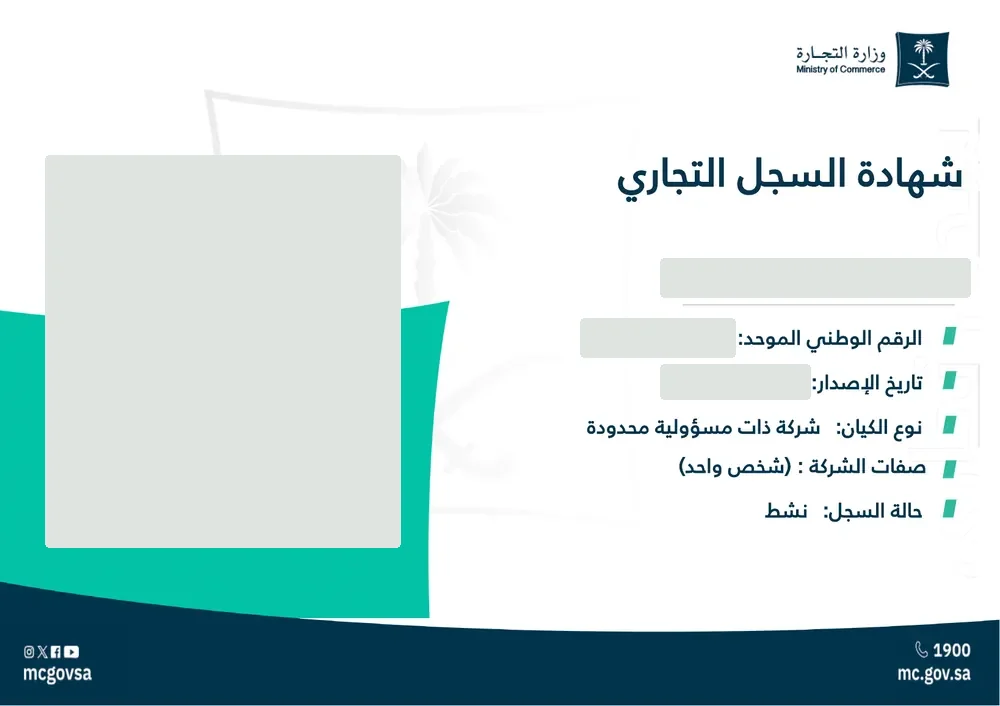
The two files below come from certificates for companies we formed, both owned 100% by companies registered in Pakistan. The certificates are on our portfolio with client details redacted. 9
| File | City | MISA registration | CR issued | MISA to CR |
|---|---|---|---|---|
| A · private limited company | Jeddah | 13 July 2025 | 7 August 2025 | 25 days |
| B · SMC private limited company | Makkah | 2 March 2025 | 24 June 2025 | 114 days |
File B was registered with MISA weeks after the Investment Law took effect. File A ran the same two ministries in under four weeks. Neither figure includes the Pakistani paperwork before MISA or the activation work after the CR, and neither is a promise for your file.
What decides the cost of a Pakistani file
The cost of forming a Saudi company from Pakistan depends on six drivers: how many documents go through MOFA, the translation volume, the Saudi government fees, the capital your activity needs, premises, and the people you put on visas.
- Documents. Every SECP-certified copy and every MOFA apostille is a separate line, and MOFA charges per document, so apostille only what the Saudi side will read.
- Translation. Every apostilled paper is translated, so the document count drives this line too.
- Government fees. MISA sets its fee on approval and again at each annual update, and the CR, trade name and licences carry their own.
- Capital. Trading carries a high floor; software and IT have none at MISA.
- Premises. A lease, a Balady licence where the activity needs one, and the National Address.
- People. The manager's visa, Iqama and work permit, medical insurance, GOSI at 2% for expatriates, the expatriate levy and any Saudi hires Nitaqat requires.
Our own fee is fixed in writing for the agreed scope, with no hidden costs. We explain how each line is built on how we work.
Mistakes that stall Pakistani files
Most delays we see are document mistakes made in Pakistan, before MISA ever sees the file; the rest come from a Pakistani step done out of order or an SBP condition missed.
| Mistake | What it costs | The fix |
|---|---|---|
| Stamping before checking the activity | Papers apostilled for a plan that MISA's special categories rule out | Check the activity against MISA's 13th-edition table first |
| A Saudi activity outside your Pakistani line of business | The bank can't clear the remittance under SBP's similar-business condition | Choose an extended line or vertical integration, or hold through a different company |
| Photocopies instead of SECP-certified copies | MOFA refuses to attest them | Order certified copies from SECP |
| Audit report without ICAP countersignature | MOFA won't attest it | ICAP countersignature or the auditor's affidavit |
| Translating before the apostille | The apostille certificate goes untranslated; MOFA won't attest an Arabic-only page | Apostille first, translate the full set after |
| Money sent before the SBP route and Saudi account are settled | A remittance your bank can't report cleanly on Form V-100 | Remit through the designated branch once the account exists |
| Letting the SECP record lapse | MISA's annual update needs a valid home registration; without it the CR can't be confirmed | Keep Form A and other SECP filings current |
| Missing the CR confirmation | Suspension 90 days after the due date, a frozen bank account, and strike-off a year later | Diary the date; keep MISA valid with at least 30 days left |
The last two rows connect: the Ministry of Commerce confirms a foreign-owned company's CR only while its MISA registration has at least 30 days to run, and SAMA's banks freeze a company's account as soon as its CR is suspended. Keeping these dates is the job of our PRO and compliance service.
When a Saudi company is the wrong first step
A Saudi company is the wrong first step when you sell goods only now and then, when your activity is trading and you can't meet MISA's 100%-foreign trading conditions, or when your Saudi work is one short contract; a distributor, an agent or contracting from Pakistan can carry the first year.
Exporters of goods usually start with a Saudi distributor or agent, because the trading conditions are built for large groups. That route needs no SBP equity permission and no MISA file. Once sales justify it, a scientific and technical office can support the distributor in your name, though it may not sell or contract itself. When you're ready to trade in your own name, our Saudi trading licence guide sets out the full conditions.
Service companies, such as software houses and engineering firms, can invoice Saudi clients from Pakistan. The client withholds Saudi tax on the payment: 5% on technical and consulting services, 15% on royalties (10% under the treaty), 20% on management fees. Watch the six-month line in the treaty: staff working in the Kingdom for more than six months in any 12 create a Saudi taxable presence, and at that point a Saudi LLC is usually the cleaner answer. A contractor working for a Saudi government body can use MISA's temporary registration instead of a permanent company.
What the Saudi company owes every year
A Pakistani-owned Saudi company carries a fixed yearly calendar: CR confirmation, MISA's annual update, accounts on Qawaem, tax returns, monthly payroll and withholding filings, Iqama renewals, and its owner's SBP reporting in Pakistan.
- CR confirmation every 12 months; suspended if not done within 90 days of the due date, struck off after a year of suspension.
- MISA annual update, about 5 working days, with the Pakistani shareholder's registration still valid.
- Financial statements on Qawaem within six months of year end; a branch files its auditor's report in the same window.
- Income tax and zakat returns within 120 days of year end; withholding tax by the 10th of each month; GOSI by the 15th.
- VAT returns quarterly, or monthly once taxable supplies pass SAR 40 million.
- In Pakistan, the Saudi company's audited accounts to your designated bank each year, and a Proceeds Realization Certificate for every dividend.
Decision checklist before you start
A Pakistani founder is ready to file when ten questions have clear answers, and most of them are settled in Pakistan before a single Saudi form is opened.
- Will a Pakistani company or you personally own the Saudi company?
- Which SBP category is that company in: IT, exporter or other?
- Is the Saudi activity of the same nature as the Pakistani business?
- Is the activity on MISA's special-category table, with a capital floor or Saudi share?
- LLC, branch, RHQ or scientific office, and why?
- Are the SECP records current, with Form A filed and names spelled the same on every paper?
- Are the latest audited accounts ready for ICAP countersignature?
- Who will be the general manager, and can the signer of the power of attorney appear at MOFA?
- Which Saudi city will the company actually operate from?
- Who keeps the yearly calendar after the CR?
Frequently asked questions
Can a Pakistani own 100% of a company in Saudi Arabia?
A Pakistani company can own 100% of a Saudi company in most activities. MISA's 13th-edition Investor Guide asks for a Saudi partner or a capital floor only in listed special categories such as trading, communications and some professional activities. Software and IT have no MISA minimum capital.
Can I form the Saudi company without travelling to Saudi Arabia?
A Saudi company can be formed from Pakistan without travelling, because the MISA registration and the CR can be filed under a power of attorney signed in Pakistan, as in Muhammad Shayan Shahzad's file. The general manager travels later for the Iqama, and a manager named in the articles can open the bank account remotely on a passport.
Do Pakistani documents still need Saudi embassy attestation?
Pakistani documents no longer need Saudi embassy attestation: since 9 March 2023 the Apostille Convention has applied between Pakistan and Saudi Arabia, and MOFA has issued apostilles since 17 May 2024. Since 27 July 2026 MOFA accepts apostille requests only after online registration.
Is a MISA licence still needed, and is MISA registration free?
The licence was replaced by registration when the Investment Law took effect in February 2025. Registration is not free: MISA sets a fee on approval, payable within 15 business days of the notice, and charges again at each annual update.
What is the minimum capital for a Pakistani-owned Saudi LLC?
The Companies Law sets no minimum capital for an LLC. MISA sets floors only for special categories, such as SAR 30 million for 100% foreign trading. The capital you write in the articles is still a commitment, so size it to the business.
Can I start the Saudi steps before the State Bank approval comes through?
The Pakistani papers can be prepared and apostilled while your bank works on the SBP side. Capital should move only once the SBP route is settled and the Saudi company's bank account exists.
Can a single-member (SMC) private limited company own a Saudi company?
A single-member company can own a Saudi company: File B in our timeline table is a Saudi LLC in Makkah owned 100% by a Pakistani SMC private limited company; it went from MISA registration to CR in 114 days.
Which Saudi city should the company be registered in?
Since 3 April 2025 one CR covers the whole Kingdom, so choose the city where the company will actually operate: its National Address and any municipal licence go there. Our two files were registered in Jeddah and Makkah.
Can a Pakistani be the general manager, and does he need a protector stamp?
A Pakistani can be the general manager and gets an Iqama sponsored by the company after a senior-profession work visa and a Wafid medical. As a Pakistani national travelling on a Saudi work visa, the manager normally completes Protector of Emigrants registration with the Bureau of Emigration and Overseas Employment before departure. Owners travelling on investor or visit visas generally don't need it.
Will I pay tax twice, in Saudi Arabia and in Pakistan?
The 2006 Pakistan–Saudi treaty prevents most of it. Saudi Arabia withholds 5% on dividends, and under Article 23 Pakistan gives a credit for Saudi tax paid on income taxed in both countries, such as dividends and interest, up to the Pakistani tax on that income. Other income the treaty lets Saudi Arabia tax is exempt in Pakistan. Confirm the treatment for your file with your tax adviser.
What happens if MISA sends questions about my application?
MISA expects an answer within 14 working days. Questions are usually about the activity or the shareholder documents, which is why the papers are checked before filing.
Sources
- HCCH, Apostille Convention status table, and the notifications listing the eight states that objected to Pakistan's accession. hcch.net status table · hcch.net notifications
- Ministry of Foreign Affairs of Pakistan, consular services and attestation SOPs (SECP copies, chamber, ICAP, power of attorney, online registration from 27 July 2026), and its notice on apostilles from 17 May 2024. mofa.gov.pk · mofa.gov.pk notice
- Ministry of Investment, Investor Guide, 13th edition (2026): registration, documents, special categories, residency and visa services. misa.gov.sa
- State Bank of Pakistan, Foreign Exchange Manual, Chapter 20, Para 13 (as amended by FE Circular 1 of 11 July 2024), and the Investment Law Implementing Regulations, Article 6. sbp.org.pk · misa.gov.sa regulations
- Companies Law (in force 19 January 2023), English text published by the Ministry of Investment. misa.gov.sa
- ZATCA, Saudi Arabia–Pakistan convention for the avoidance of double taxation, signed 2 February 2006, with the treaty text. zatca.gov.sa
- ZATCA, General Guideline for Withholding Tax (May 2026). zatca.gov.sa
- SAMA Rulebook: circular 44073468 on apostilled documents (6 April 2023) and the rules for remote account opening for foreign companies (2 February 2022). rulebook.sama.gov.sa apostille · rulebook.sama.gov.sa remote opening
- Saudia Company Formation, portfolio: MISA and CR certificates for Files A and B. saudiacompanyformation.com/portfolio
How we checked this. Every rule in this guide was checked against the sources above on 16 October 2026: the SBP chapter, MISA's 13th-edition guide, the treaty text and MOFA's consular page were read in full. Timelines come from certificates in our own files. We update the guide when the rules change and record the date under the title.